 English
English
English
 English
Updated on 03.07.2026
On June 30, 2026, the US Supreme Court upheld the birthright citizenship principle and overturned Trump’s executive order. For families, this means that anyone born in the US remains a US citizen. This restores predictability.
Share article:
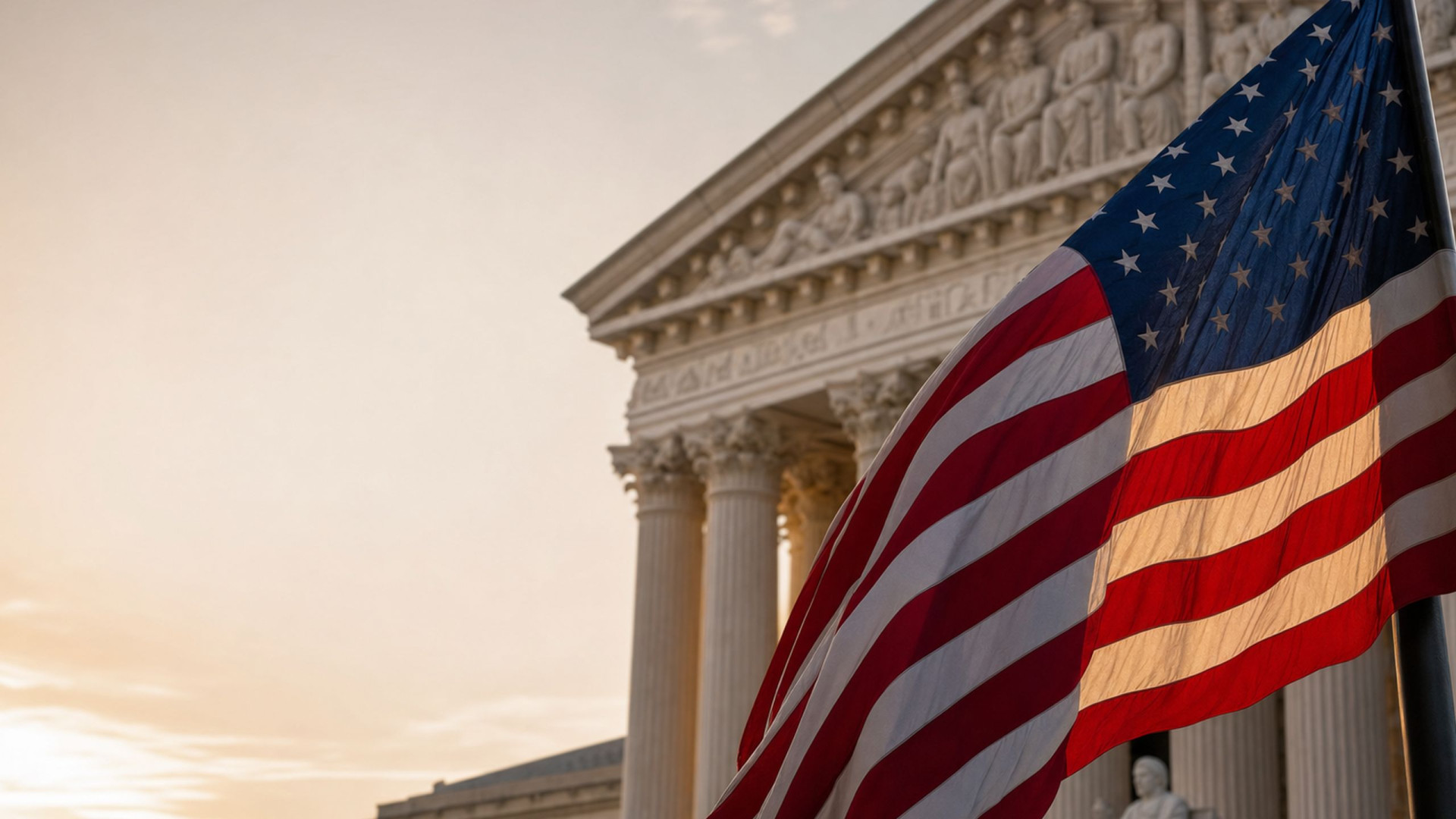
On June 30, 2026, the U.S. Supreme Court in "Trump v. Barbara" It was decided that the principle of birthright citizenship will remain in effect: Anyone born on U.S. soil is and remains a U.S. citizen. The executive order through which President Trump sought to restrict this principle upon taking office in January 2025 is therefore null and void. Consequently, the existing legal situation remains unchanged.
The principle of birthright citizenship is enshrined in the 14th Amendment — that is, in the Constitution itself, rather than in a mere statute that a government could unilaterally change. This is precisely why the Trump administration’s executive order failed. The Supreme Court upheld the existing principle by a clear majority.
In practical terms, this means that a child born on US soil while the parents are visiting the United States automatically receives US citizenship, regardless of the parents’ immigration status. This principle, which has been in effect for more than 150 years, remains unchanged.
With the executive order issued in January 2025, the U.S. government sought to reinterpret the principle of birthright citizenship: A child born in the United States would only automatically receive US citizenship if at least one parent was a US citizen or held a Green Card. Children of parents with temporary visas (such as tourist, work, or student visas) or without legal residency status would have been excluded. The stated goal was to curb so-called “birth tourism” and to link citizenship to the parents’ permanent residency.
The proposed new regulation would have primarily affected temporary stays in the US, such as those related to a work assignment, a work visa, or studying abroad. In such cases, children born in the US would no longer have automatically acquired US citizenship. This ruling has put an end to that uncertainty, and the Supreme Court has clearly rejected the proposed new regulation.
The decision puts an end to the uncertainty of the past few months. At times, it was unclear to those affected what citizenship and residency status children born in the US would have in the future and whether additional steps regarding residency would be necessary.
Although the birthplace principle continued to be applied in principle throughout the proceedings, there were isolated instances of difficulties in issuing US birth certificates in various US states. The Supreme Court’s decision has now definitively clarified that the birthplace principle remains in effect without change. This provides legal certainty for expectant parents, families, and companies that send employees to the United States.
No changes for current or planned stays:
The ruling confirms the existing legal situation. Additional visas or special transitional arrangements for children born in the United States are not required.
Applying for a birth certificate and a US passport:
After the birth, the relevant US state issues the birth certificate. This document serves as the basis for applying for a US passport. When traveling to or from the United States, US citizens (including those with dual citizenship) must generally travel with their US passport.
Pregnant travelers:
The decision does not change the existing entry requirements. US border or consular officials may question pregnant travelers and/or deny visas or entry if there is suspicion that the purpose of entry is solely to give birth in the United States (“birth tourism”). However, for travel as part of a work assignment or on a regular work visa, this rarely poses a problem in practice.
Note regarding US tax liability:
US citizenship generally entails lifelong US tax liability, regardless of whether the person later returns permanently to Germany or to another country. Seeking tax advice early on may be advisable.
The ruling is less of a surprise than a confirmation: As expected, a deeply rooted constitutional principle has been reaffirmed. For families, businesses, and others affected, the ruling now provides the necessary legal certainty.
Stays and assignments can once again be planned based on the current legal framework, which remains unchanged. However, specific questions — such as those regarding tax implications or the procedures surrounding childbirth in the United States — should still be addressed in a timely manner on a case-by-case basis.
Date:
Wir und unsere Partner nutzen Cookies, um personenbezogene Daten wie z.B. Browsing-Daten zu speichern und abzurufen, um z.B. Inhalte und Werbung bereitzustellen und zu personalisieren sowie die Verwendung der Website zu analysieren und das Benutzererlebnis zu verbessern. Sie erfahren mehr über die Zwecke, für welche wir und unsere Partner Cookies einsetzen, wenn Sie unten auf den Button „Cookie Einstellungen“ klicken. Hier können sämtliche Einstellungen auch geändert werden. Nachträglich kann man jederzeit seine Cookie-Auswahl überdenken oder seine Einwilligung widerrufen, indem man auf den Link zu den Cookie-Einstellungen im Footer unserer Webseite klickt. Beachten Sie bitte, dass das Blockieren einiger Cookie-Typen unsere Möglichkeiten zur Bereitstellung von auf Ihre Interessen zugeschnittenen Inhalten haben kann oder einige Funktionen der Webseite nur eingeschränkt zur Verfügung stehen.
Durch klicken auf “Alle Cookies akzeptieren” stimmen Sie unserer Nutzung und der Weitergabe Ihrer Daten an unsere Partner zu.